
Neurohappy Logo
£0.00 0

Cart

No products in the cart.

Backed By Science

Our formulations draw on established information about nutrients and their normal roles in the body. This page separates those authorised nutrient claims from wider research on nutrition and sensory-related food preferences. The studies below are not clinical trials of the finished Neurohappy products.

An image of a blue science flask and microscope with an orange heart between them, set against a transparent background. Represents love for science.

Normal nutrient functions

These examples concern nutrients present in both formulas. The products have different compositions and serving sizes; check the relevant product label for amounts.

NutrientAuthorised nutrient function
MagnesiumContributes to normal psychological function and the normal functioning of the nervous system.
Vitamin CContributes to the normal function of the immune system.
Vitamin DIs needed for normal growth and development of bone in children.
ZincContributes to the normal function of the immune system.

Extra Sensitive contains no iron, iodine, selenium, vitamin B2, vitamin B12, inulin or choline. Research about those ingredients should not be presented as evidence about Extra Sensitive.

Authorised claims have conditions of use. General nutrient information and studies of other supplements do not demonstrate the same outcomes for a finished Neurohappy product.

View the official Great Britain claims register · Extra Sensitive formula · Original formula

Feeding problems and nutrient intake: Sharp and colleagues’ meta-analysis reports higher odds of feeding problems, not fivefold higher odds of nutrient deficiencies.

A woman and child reading a book together, smiling. The woman wears a purple shirt and the child a yellow one. The mood is joyful and warm.

Why Science Matters

Restricted food choices and mealtime difficulties can make daily nutrition challenging for some families. A published meta-analysis found higher odds of feeding problems in autistic children; it did not establish that children are five times more likely to have nutrient deficiencies. Nutrient intake and individual needs vary. Extra Sensitive and Original contain different ingredients.

Research and resources: what they tell us

Food preferences and sensory sensitivities

Practical background reading from psychologist Emily Kuschner. This is general guidance, not a trial of Neurohappy.

Micronutrient deficiencies: research overview

Research by Dimitar Marinov and colleagues. Nutrient needs vary; this is background evidence, not proof of a benefit from Neurohappy.

Nutritional status in autistic children

Research by Afnan Alhrbi and colleagues. Read the population, methods and limitations before applying findings to an individual child.

Vitamin and mineral supplements: research survey

James B. Adams and colleagues. A research survey about supplements; it does not test either Neurohappy formulation.

Vitamin B12: review of research

Mateusz Zwierz and colleagues. Original contains B12; Extra Sensitive does not. This review should not be read as evidence about Extra Sensitive.

Vitamin interventions: systematic review

Yonghui Shen and colleagues, 2025. Studies of different vitamin interventions do not establish benefits for the finished Neurohappy products.

Chicory root fibre: ingredient research

A report from ingredient supplier BENEO, rather than an independent trial of Neurohappy. Original contains inulin; Extra Sensitive does not. Findings at other doses should not be applied to either pouch.

Folinic acid: a different form and dose

Frye and colleagues studied high-dose folinic acid in a small trial. Neurohappy uses 5-MTHF, a different form of folate. This trial does not demonstrate a communication benefit from Neurohappy.

Vitamin A: review of research

Zhonghui Liu and colleagues. Background research on vitamin A, not a clinical trial of Neurohappy.

Selenium: child development research

Gulnara Batyrova and colleagues. Selenium is included in Original, not Extra Sensitive. This is wider nutrient research.

Vitamin D status: research study

Zuqun Wang and colleagues. A study of vitamin D status should not be taken as proof that a supplement changes autism-related outcomes.

Vitamins and minerals: general information

British Nutrition Foundation. An introduction to nutrient functions, not evidence about a particular Neurohappy formulation.

Folic acid: systematic review

Bianka Hoxha and colleagues. Folic acid, folinic acid and 5-MTHF are different forms of folate; research findings cannot be assumed to apply across forms and doses.

Folate metabolism: background research

Richard E. Frye and colleagues. Research on potential biomarkers does not establish a health benefit from Neurohappy.

Vitamin B6 and magnesium: evidence limitations

The linked Cochrane review found insufficient evidence to recommend this intervention as an autism treatment. This is separate from authorised claims about the normal functions of these nutrients.
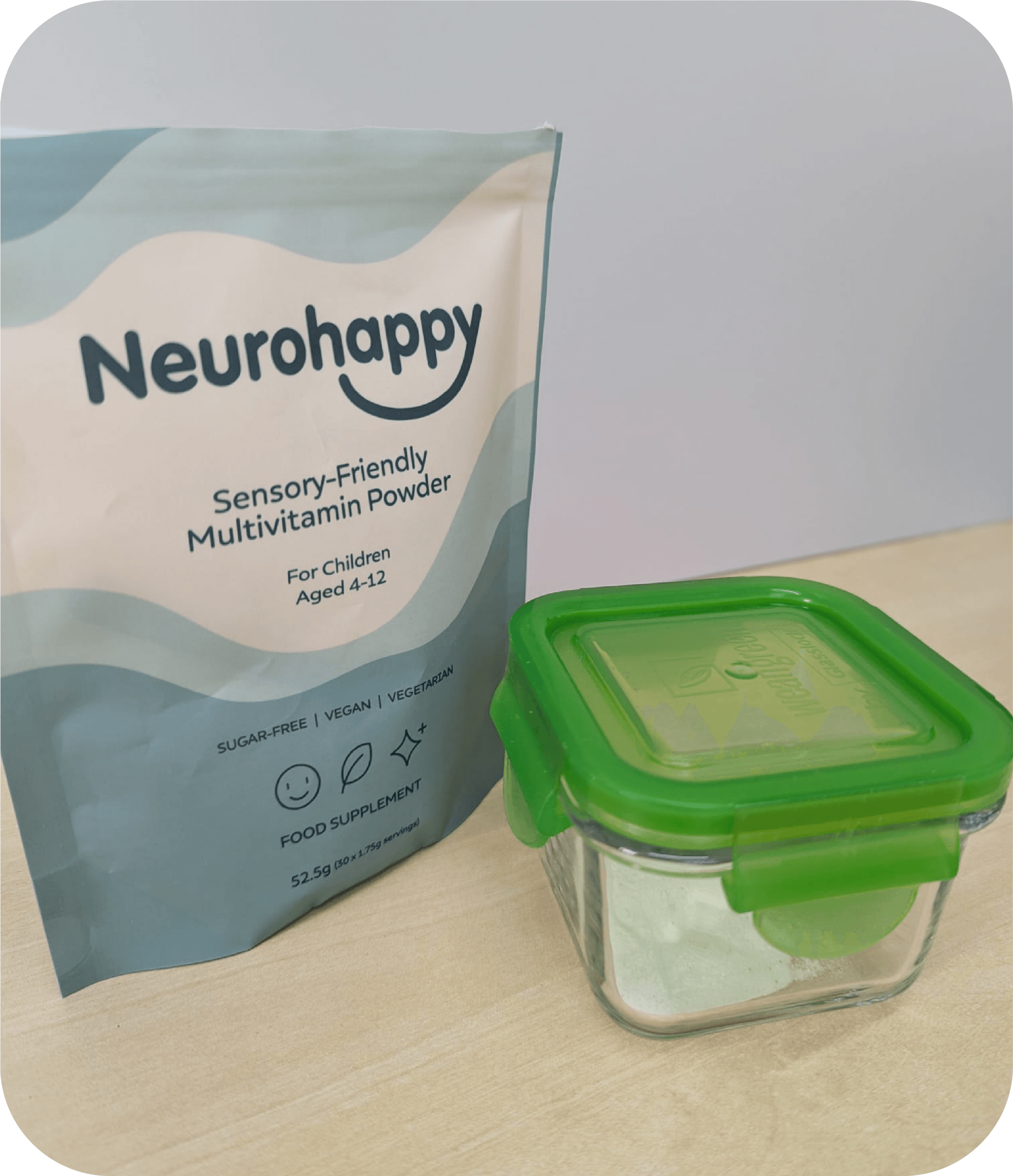
One Pouch of Neurohappy multi vitamin powder alongside a resealable storage tub

Join the Neurohappy Community 💚

Get gentle nutrition tips, exclusive offers & early access to new products.


Fast UK Delivery
Clean, Natural Ingredients
Trusted by Neurodivergent Families
© 2026 Neurohappy
Secret Link